Based on my experience in the class where we were taught DESIGN – Creating the Future by Design Thinking at OSR/BGI, I reflect upon Design Thinking. I ask myself if is the concept is similar, to some extension, to Organizational Development (OD) practices. Or if it is similar to the concept of method developed by Edgar Morin in his work called by the same name “Method”. I appreciate several aspects of Design Thinking and normally I use it as a guide to address problems or creating change at work. When I say problems, I don’t cast any judgment to the word, problems are defined as all sort of situations or opportunities that need effort to get in a desired place.
Design Thinking and OD
My biggest question today: Is Design Thinking the new name, new trend or new approach for Organization Development? Sometimes it seems that OD is viewed as “old fashion” for those that bring new names to re-brand a practice. Personally, I respect foundational knowledge, so I get somewhat skeptical when people don’t bring the right reference of what they are doing.
A way to explore this (dis)encounter of OD and Design Thinking: when an OD consultant comes to an organization to help in an organization development issue, he/she will “design” an intervention using OD tools and approaches. At this point, design is a method and not a field of knowledge. In what ways can this consultant work on organization development using Design Thinking?
We can’t forget that Design Thinking has some connection to design and development of products and services, so naturally it will use methods like prototyping to seek innovation. That said, one main OD skill that seems unfamiliar to Design Thinking is the understanding and leveraging group process development.
Method in Edgar Morin and Design Thinking
When Edgar Morin explains the concept of method of complexity in his book “Science Avec Conscience”[1] he advises that complexity has no methodology and method is like a “memento”. In his words, method in complexity asks us to think concepts without having conclusions. Method in complexity needs strategy, initiative, invention, and art. Method is a thinking activity of a thoughtful subject.
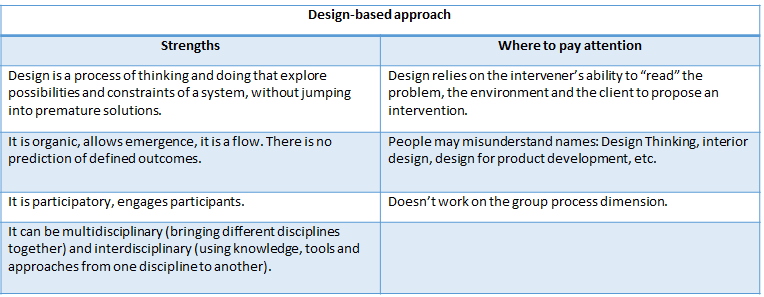
I believe it is possible to correlate Design Thinking with this concept of method I just shared. Design requires a posture of letting outcomes emerge from the process. We have strategies to facilitate the creative process, but we don’t know which results it will generate in advance.
Morin cites Antonio Machado to explain the essence of method and complexity: “…caminante, no hay camino, se hace camino al andar. Al andar se hace camino, y al volver la vista atrás se ve la senda que nunca se ha de volver a pisar.”[2] Or: “…wanderer, there is no road, the road is made by walking. By walking, one makes the road, and upon glancing back one sees the path that will never be trod again. This is a very rich analogy to understand that Design Thinking will facilitate the emergence of what needs to emerge, of what is possible to emerge in a determined moment, and all the further attempts will bring a different outcome/knowledge. I think Design Thinking as Edgar Morin refers to a method: a path that we don’t know ahead of time. If we know, it is not a method anymore, it is a repetition of something we used before.
Key points related to Design Thinking
Design Thinking and I
As an Organizational Designer, when working in organizational change or facilitating team processes, I use inquiry and relationship building with the main client to seek for understandings about what the organization needs. Using dialogue and requesting partnership with the main client, we build together what the client needs, including elucidating some processes that sometimes even the client is not aware of.
Examples of how I have applied Design Thinking to organizational challenges at work are described in the following chart:

OD – Design Thinking – Method in Complexity
The richest result, the richest process and the most delightful work experience will come from openness to learn how to blend different knowledge and perspectives. This is why I appreciate Design Thinking.
 interdisciplinaryhr.com